
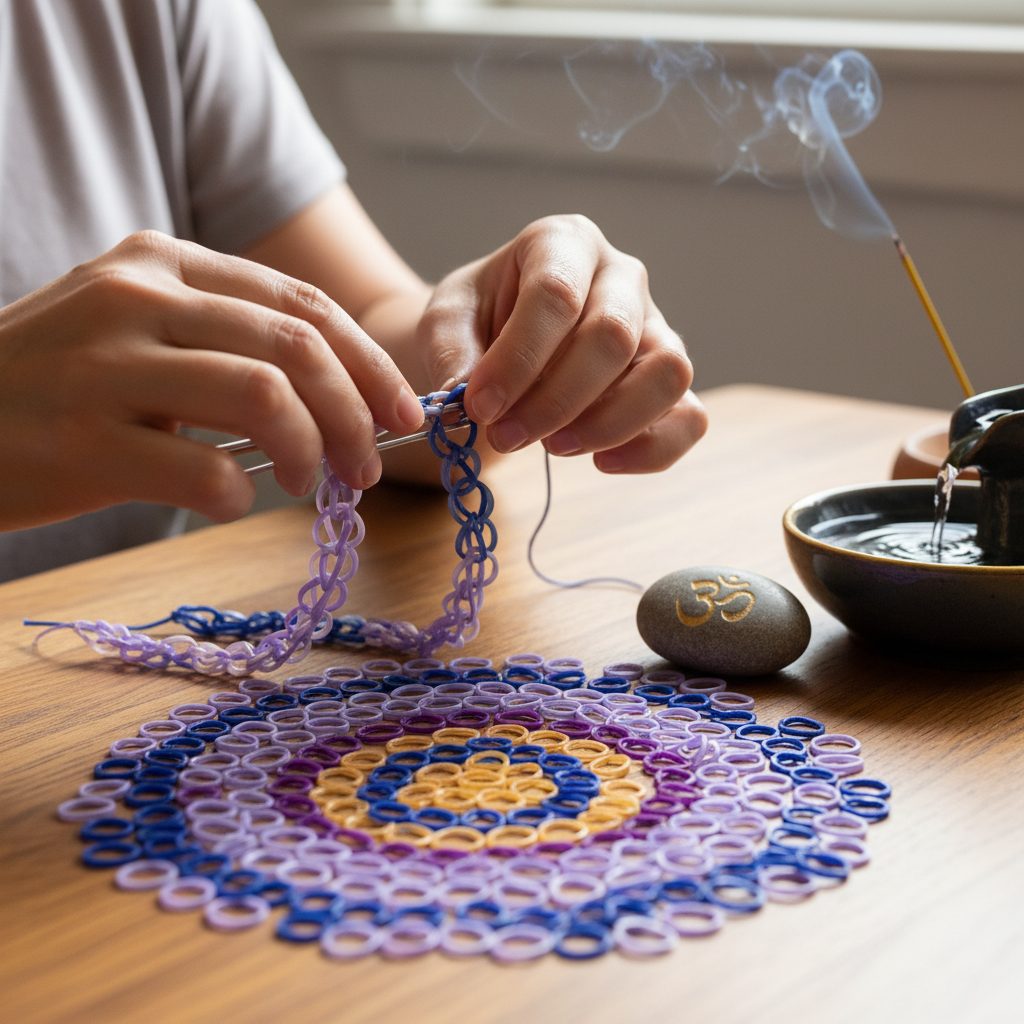
I was sitting at my kitchen table the other day, looking at a pile of neon-colored bands, and it hit me—there’s something incredibly satisfying about turning these tiny, chaotic loops into something wearable. You’ve probably seen these bracelets everywhere, from school playgrounds to high-end music festivals. While they might look like a simple kid’s craft, I’ve found that the process of learning how to make rubber band bracelets is actually one of the most meditative things you can do with your hands.
It’s not just about the jewelry, though. It’s about that “flow state” we get into when we’re creating something from scratch. If you’ve been feeling a bit stressed or just need a break from staring at a screen, trust me—grabbing a handful of bands is a great way to reset your energy.
Getting Started Without the Fancy Gear
One of the biggest misconceptions is that you need a giant plastic loom to get started. You don’t. In fact, some of my favorite designs were made using nothing more than my own two fingers or a couple of pencils. If you’re just learning how to make rubber band bracelets, I always suggest starting with the “Fishtail” pattern. It’s the classic look that everyone recognizes, and it’s surprisingly sturdy.
Here’s what you’ll actually need to have on hand:
- A bag of small rubber bands (stick to one or two colors at first so you don’t get confused).
- A C-clip or S-clip to hold the ends together.
- Your fingers (or two pens taped together if your fingers get tired).
- A bit of patience—your first few might look a little wonky, and that’s okay!
The Finger-Loom Method That Never Fails
Whenever I show someone how to make rubber band bracelets for the first time, I use the finger method. It’s tactile, portable, and you don’t have to carry around a bulky plastic board.
Setting the Foundation
Start by taking your first band and twisting it into a figure-eight (or an infinity symbol) over your index and middle fingers. This “cross” is the only time you’ll twist a band. It acts as the anchor for the entire bracelet. Once that’s in place, slide two more bands on top of it, but keep these straight—no twisting this time.
The Looping Process
Now comes the fun part. Take the bottom band (the figure-eight one) and pull the left side up over your fingertip and into the center. Do the same with the right side. Now you have one band “looping” around the two straight bands above it.
From here on out, the rhythm is simple:
- Add a new straight band on top.
- Pull the bottom-most band up and over into the middle.
- Repeat until the chain is long enough to wrap around your wrist.
I’ve noticed that if I pull the bottom of the bracelet every few minutes, the stitches tighten up and look much more professional. It’s a small trick, but it makes a huge difference in the final look.
Why the Colors You Choose Actually Matter
Since we talk a lot about energy and intention here, I can’t ignore the color aspect. When you’re figuring out how to make rubber band bracelets, think about what you want to invite into your life. I recently made a green and gold one specifically to wear during work hours—it’s a tiny, wearable reminder of growth and prosperity.
If you’re feeling a bit burnt out, try using blues and whites. If you need a spark of creativity, go for oranges and yellows. It might sound a bit “woo-woo,” but there’s real power in choosing colors with intention. Plus, it makes the crafting process feel much more personal than just following a random pattern.
Leveling Up Your Designs
Once you’ve mastered the basic Fishtail, you might get the itch to try something more complex. I remember the first time I tried a “Hexafish” or a “Dragon Scale” pattern—I snapped about twenty bands before I got it right. But that’s part of the charm.
If you want to move beyond the basics, you can start incorporating beads or even charms into the weave. You just slide a bead onto a rubber band before you add it to your fingers or loom. It adds a bit of weight and makes the bracelet feel more like a piece of actual jewelry and less like a craft project.
A Quick Note on Finishing the Bracelet
The most frustrating part for me used to be the very end. You’ve spent twenty minutes looping, and then—snap!—the whole thing unravels. To avoid this, make sure you’re down to just two loops on your fingers before you try to attach the clip. Slide both loops onto one finger, hook the C-clip through all of them at once, and then attach it to the very first figure-eight loop you started with.
It takes a second to get the hang of it, but once that clip is secure, that bracelet isn’t going anywhere.
Have you tried making these yet? Or maybe you have a bag of bands sitting in a junk drawer from a few years ago? Dig them out and give it a shot. It’s a simple way to clear your head and end up with something cool to show for it.