
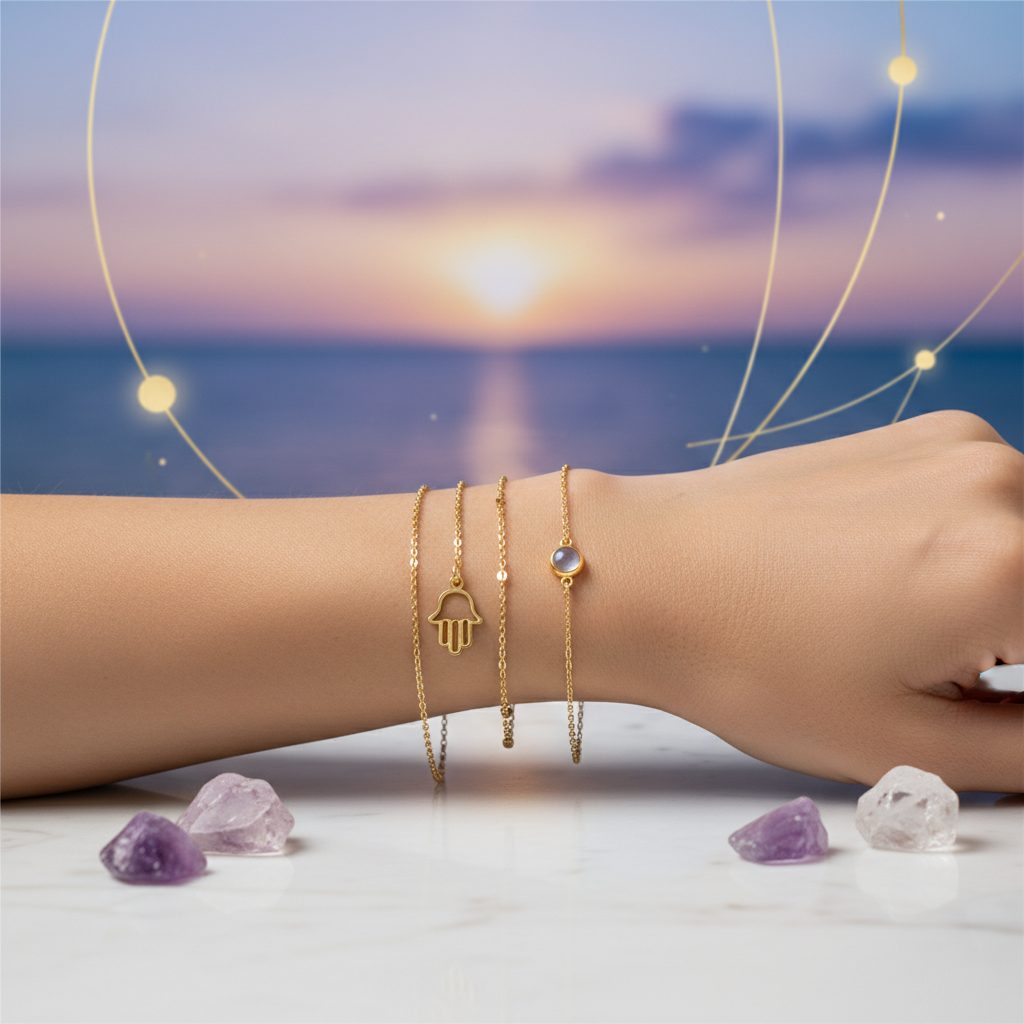
I was sitting at my favorite local cafe the other day when I noticed the barista had this incredibly delicate gold chain on her wrist. It caught the light every time she handed over a cup, but there was something different about it. No clasp, no dangling bit of metal, no visible way to take it off—just a seamless, shimmering loop. It looked like it was practically part of her skin.
I’ll admit, I was curious. It turns out I’d just spotted my first permanent bracelet “in the wild.” If you’ve been scrolling through social media lately or noticing your friends sporting minimalist jewelry that never seems to leave their wrists, you’ve probably wondered the same thing: what is a permanent bracelet, and why is everyone suddenly obsessed with them?
So, What Exactly Is a Permanent Bracelet?
At its simplest, a permanent bracelet is a piece of jewelry—usually a dainty 14k gold or sterling silver chain—that is welded directly onto your wrist. Instead of using a traditional lobster claw or spring ring clasp, a jeweler uses a specialized, high-tech welder to join the two ends of the chain together.
The result? A custom-fit piece of jewelry that stays on 24/7. You sleep in it, shower in it, work out in it, and live your life without ever having to fiddle with a tiny clasp in the morning. It’s the ultimate “set it and forget it” accessory. I’ve always struggled with those tiny clasps—especially when I’m in a rush—so the idea of a permanent solution actually makes a lot of sense to me.
How Does the Whole Process Work?
I know what you might be thinking because I thought it too: Does it hurt? The idea of “welding” something onto your body sounds a bit intense. But here’s the thing—it’s actually completely painless and surprisingly quick. When you go in for a “sparking” session (as it’s often called), the process usually looks like this:
- Choosing your chain: You pick out the style and metal that suits your vibe. Most people go for something thin and classic.
- The custom fit: The jeweler measures the chain to your wrist so it’s perfectly sized—not too tight, but not so loose that it gets caught on things.
- The spark: A small leather or fabric barrier is placed between your skin and the chain. The jeweler then uses a tiny welder to close a jump ring. There’s a quick flash of light, and just like that, you’re “linked.”
The whole thing usually takes about ten to fifteen minutes. It’s less of a medical procedure and more of a fun, boutique experience.
Why Are People Choosing “Forever” Jewelry?
You might wonder why someone would want to commit to a piece of jewelry indefinitely. Beyond the sheer convenience of not having to put it on every day, there’s a deep sense of symbolism involved. For many, a permanent bracelet acts as a modern-day friendship bracelet or a way to mark a significant milestone.
I’ve seen mothers and daughters get them together, or best friends getting matching chains before one of them moves away. It represents a bond that doesn’t have an “off” switch. In the world of energy and intention—something we talk about a lot here—wearing a continuous loop of precious metal can also be seen as a symbol of infinity, protection, or a constant reminder of a personal goal you’ve set for yourself.
The Practical Stuff You’re Probably Wondering About
Now, let’s get into the “what ifs.” Life happens, and sometimes we need to be jewelry-free. Here is the reality of living with a permanent piece:
What about airport security or MRIs?
You don’t need to worry about the TSA. Most permanent jewelry is made of fine metals like gold, which aren’t magnetic and generally don’t set off airport metal detectors. However, if you need an MRI, you will likely have to remove it. The good news? You can easily snip it off with a pair of scissors at the jump ring and most jewelers will weld it back on for a small fee later.
Is it actually durable?
These chains are designed to be delicate, but they aren’t fragile. Because they are custom-fitted, they don’t snag as easily as loose bracelets might. That said, they aren’t indestructible. If you work a very manual job or engage in high-contact sports, you’ll want to be mindful. But for everyday life? They hold up remarkably well.
What if I just get tired of it?
The “permanent” part isn’t as scary as a tattoo. If you decide you’re over the look or just want a change, a simple pair of kitchen shears or wire cutters will do the trick. You aren’t locked in forever; you’re just locked in for as long as you want to be.
I think the appeal lies in that mix of minimalism and meaning. We spend so much of our lives constantly changing things—our clothes, our tech, our schedules. There’s something grounding about a small, beautiful thing that just stays. It becomes a part of your daily rhythm, a little glint of gold that reminds you of a moment, a person, or just the fact that you deserve to wear something beautiful every single day.
Does the idea of “forever jewelry” appeal to you, or do you prefer being able to change your look every morning? I’d love to hear if you’ve taken the plunge and gotten sparked!