Green aventurine is the stone people mean when they say “the lucky green one”. It shows up in almost every list of feng shui wealth crystals, and it is one of the friendliest stones to start with: affordable, easy to wear and pleasant to look at. Here is what the name means, why it is tied to luck, and how to choose a bracelet that is worth wearing.
What is green aventurine?
Green aventurine is a form of quartz that contains tiny platelets of a mineral called fuchsite, a chromium-rich mica. Those inclusions give it its green color and a soft, glittering shimmer that gemologists call aventurescence. It sits at about 6.5 to 7 on the Mohs scale, so it is durable enough for regular wear.
The word “aventurine” comes from the Italian a ventura, meaning “by chance”. The name was first given to a glittering glass made in Murano that was said to have been discovered by accident, and it was later carried over to the natural stone that looks like it.
Why it is called the stone of opportunity
The “by chance” origin fits the stone’s modern reputation. In crystal traditions green aventurine is called the Stone of Opportunity, associated with:
- Luck and chance. Being ready when a good opening appears.
- Optimism. A cheerful, forward-looking outlook.
- Prosperity. Its green color connects it to growth and money.
The feng shui link: green, wood and the southeast
In feng shui, green belongs to the Wood element, the element of growth. The southeast sector of a home, the traditional wealth corner in the Bagua map, is also linked with Wood, so green stones and plants are the classic choice for that area. That is why aventurine keeps turning up in wealth lists, and why a green aventurine piece is a natural companion to the tips in our guide to wealth corner crystals.
How to choose a green aventurine bracelet
Look for natural variation
Real green aventurine is rarely one flat color. Expect gentle shifts from lighter to deeper green and a faint glitter when the beads catch the light. Very uniform, glassy-bright green beads may be dyed quartz or glass.
Check the size and the listing
The bead size, the stone name and the cord type should all be in the product description. If a listing only says “green crystal”, ask what it is.
Think about how you will wear it
A single bead on a braided cord is light and casual. A full strand of beads is bolder. Either way, choose a fit you will actually leave on.
Green aventurine pieces we carry
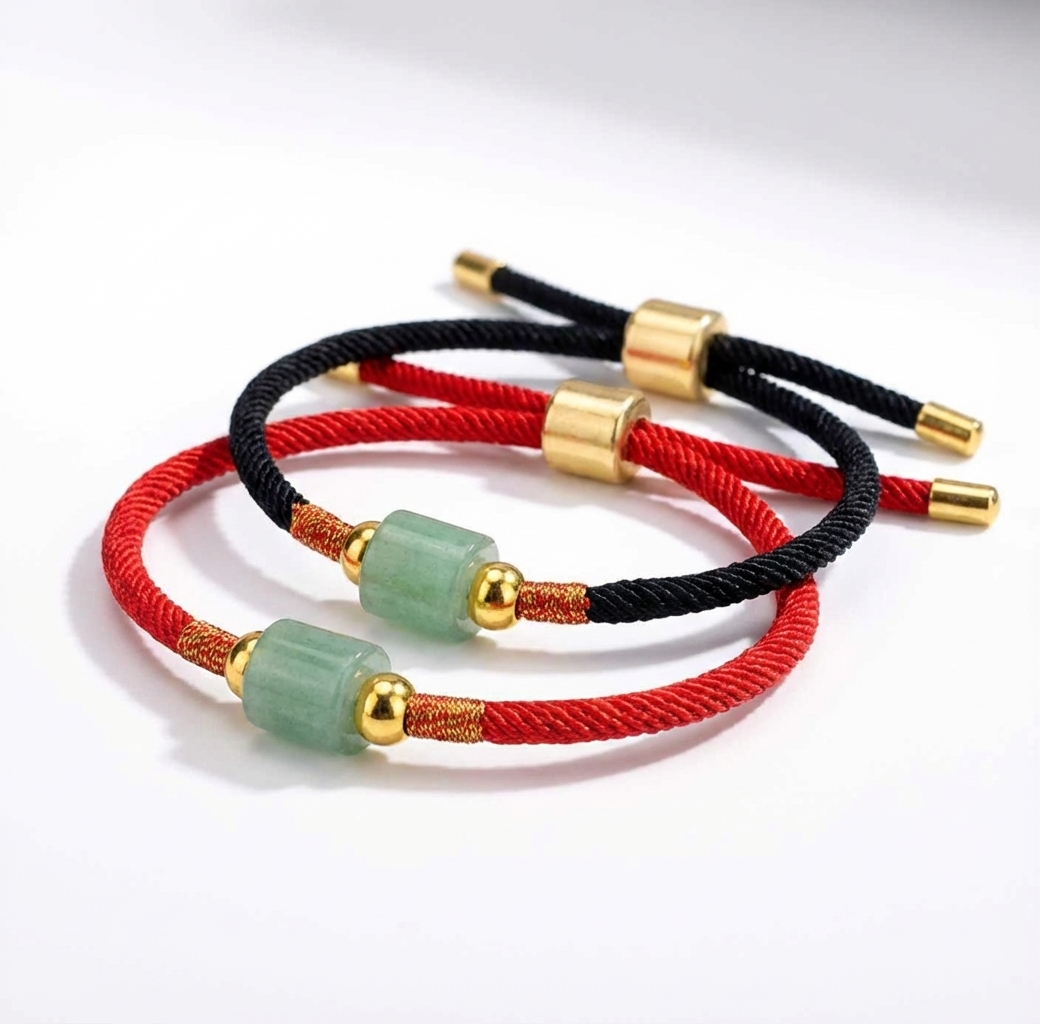
The Tibetan String Green Aventurine Bracelet has a genuine green aventurine bead paired with a hand-braided Tibetan string and 14K gold-plated accents, with an adjustable design that fits most wrists. If you like the knotted cord style, see our guide to what a Tibetan knot bracelet means.
The Natural Aventurine and Hematite Triple Stone Luck Bracelet combines aventurine with hematite, a good option if you want a fuller, more substantial bracelet.

For your desk or wealth corner, the Green Aventurine Money Tree has genuine green aventurine leaves on flexible copper branches, stands 18cm tall, and sits on a resin base detailed with traditional Chinese coin patterns. Our guide on where to place a feng shui money tree shows where it goes.
Green aventurine and other stones
- With citrine for a classic wealth pairing. See our page on citrine for wealth.
- With jade for a green-on-green look. See the meaning of a green jade bracelet.
- With hematite for a grounded, darker contrast.
Which hand to wear it on
The general convention is the left wrist, for receiving opportunity, but there is no fixed rule, and our guide to which wrist to wear a red string bracelet explains how that idea developed. Wear it where you are comfortable.
Caring for green aventurine
- Wipe with a soft, damp cloth and dry it.
- Avoid harsh chemicals, perfumes and long soaking, especially if the beads are strung on elastic.
- Store it separately from harder stones so nothing scratches.
Green aventurine compared with other green stones
| Stone | What it is | How it looks | Hardness (Mohs) |
|---|---|---|---|
| Green aventurine | Quartz with fuchsite mica | Soft glitter, translucent to opaque | About 6.5 to 7 |
| Jade | Jadeite or nephrite | Smooth, waxy to glassy, no glitter | About 6 to 7 |
| Malachite | Copper carbonate | Bold banded rings of green | About 3.5 to 4 |
| Peridot | Olivine | Bright yellow-green, transparent | About 6.5 to 7 |
| Green fluorite | Calcium fluoride | Often banded and translucent | About 4 |
In feng shui all of these can stand in for the Wood element, so the choice is mostly about look, budget and how hard you plan to wear them. Aventurine is one of the most forgiving for everyday use.
Other colors of aventurine
Aventurine also comes in peach, orange and red-brown shades. Blue “aventurine” deserves caution: it is very often man-made glass, sold as blue goldstone. Green is the natural color most tied to luck and prosperity, and the one to look for if that is your goal.
Frequently asked questions
Is green aventurine really lucky?
It is traditionally called the stone of luck and opportunity. Whether that works for you is a matter of belief, but many people enjoy it as a positive symbol.
Is green aventurine the same as jade?
No. Aventurine is quartz, while jade is a different mineral (jadeite or nephrite). They can look alike at a glance, and aventurine is sometimes sold as “Indian jade”. To tell them apart, look for aventurine’s soft glitter.
Can it go in water?
The stone can, but the cord may not like it. Take it off for showers and swimming to protect the string.
A note: the meanings above come from crystal and feng shui traditions and are not guarantees. A stone is a meaningful accessory, not a financial strategy.
[social_share]