Hematite looks almost like polished metal rather than a stone: a dark, silver-gray mineral with a dense, cool weight in your hand. That metallic look is exactly why it has been carved into seals, beads and amulets for thousands of years, and why it is one of the first stones people reach for when they want to feel grounded.
If you have picked up a hematite bracelet and want to know what it actually means, how “magnetic hematite” jewelry works, and how to wear and care for it, this guide covers all of that.
What is hematite?
Hematite is an iron oxide mineral, one of the main ores iron is mined from. Its name comes from the Greek word for blood, haima, because when the stone is scratched or ground into powder, it leaves a deep red-brown streak, a strong contrast to its dark metallic surface. Ancient Egyptian and Roman carvers used hematite for seals, amulets and cosmetics, and it later became a common stone in Victorian mourning jewelry, prized for its deep, matte-black finish.
Why is hematite considered grounding?
In crystal healing and feng shui, hematite is treated as a grounding stone, meaning it is associated with stability, focus and staying connected to the present moment rather than scattered or anxious. A few qualities feed into that reputation:
- It is heavy and dense. Among common beads, hematite feels noticeably weightier, which many people associate with being “weighed down” to the earth rather than drifting.
- It is linked to the Root Chakra. In the chakra system, the Root Chakra at the base of the spine is tied to safety, stability and survival instincts, and dark, dense, earth-toned stones like hematite are traditionally used to represent it. If you want the full chakra picture, see our 7 chakra bracelet meaning guide.
- Its mirror-like surface. Highly polished hematite is sometimes described as “reflecting back” negative energy, which is why it shows up often in protection-themed bracelets alongside stones like black obsidian and tiger’s eye.
Is “magnetic hematite” jewelry actually magnetic?
This is worth knowing before you buy. Natural hematite is only very weakly magnetic. Most of the affordable “magnetic hematite” beads sold in jewelry today are a man-made material, sometimes called hematine or magnetic hematite, made by fusing powdered hematite or similar iron oxide with a ceramic magnet. That is why these beads snap together strongly and are sold as “magnetic therapy” bracelets.
Whether magnetic bracelets have a measurable health effect is not something we make a claim about here; treat the wellness language on these products as a traditional or cultural framing, not a medical one, the same way we note for other stones in our guides.
A genuine safety note: if you wear a pacemaker, insulin pump or any other implanted medical device, or if you carry magnetic-stripe cards or sensitive electronics in the same pocket, check with your doctor and be cautious with any magnetic jewelry, not just hematite.
Hematite bracelets: what the combinations add
Hematite rarely appears alone in jewelry. It is usually paired with another stone, and each pairing shifts the meaning slightly.
Hematite with tiger’s eye and obsidian
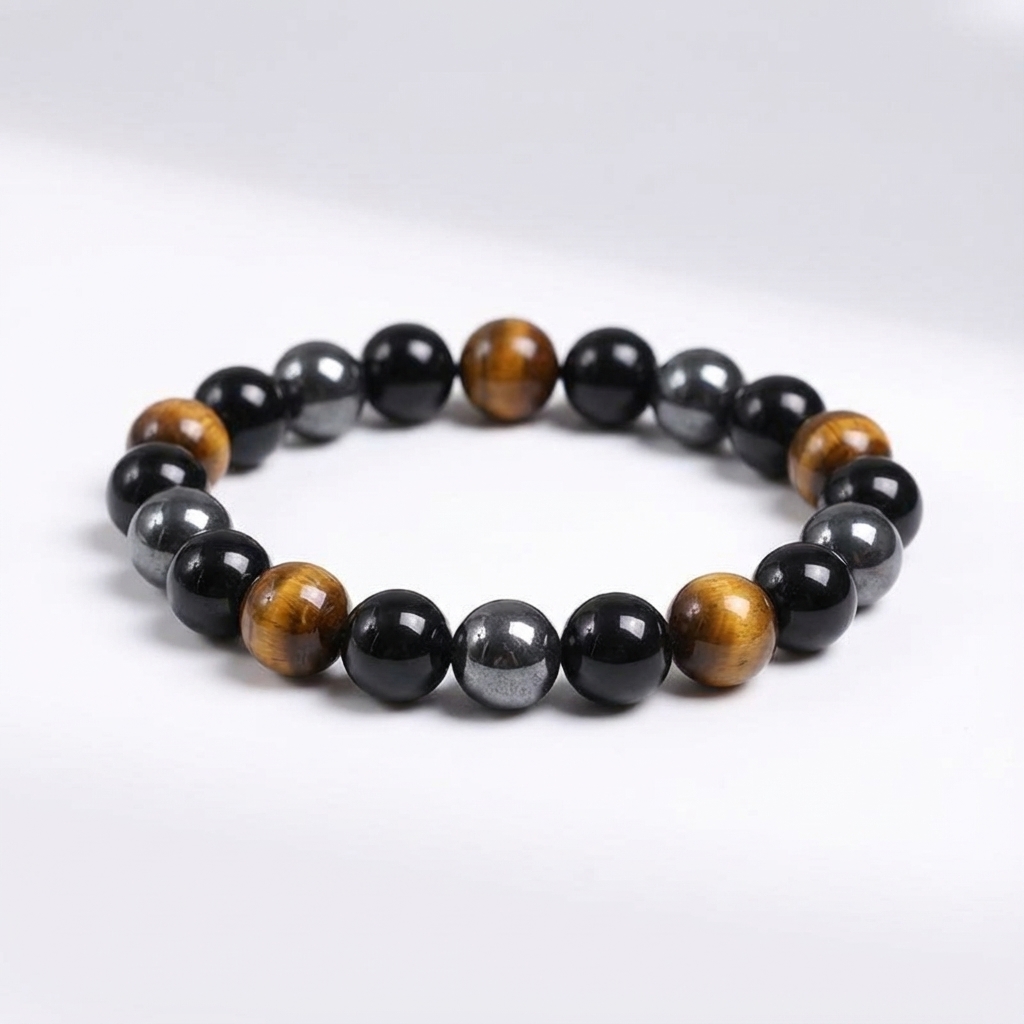
The Triple Protection Bracelet strings 10mm genuine black obsidian, tiger’s eye and hematite beads on a durable elastic cord. This is the classic “grounding plus protection” combination: obsidian for absorbing negativity, tiger’s eye for confidence, and hematite to anchor the other two. If you want to understand the obsidian side specifically, see our guide on black tourmaline vs obsidian for protection.
Hematite with aventurine
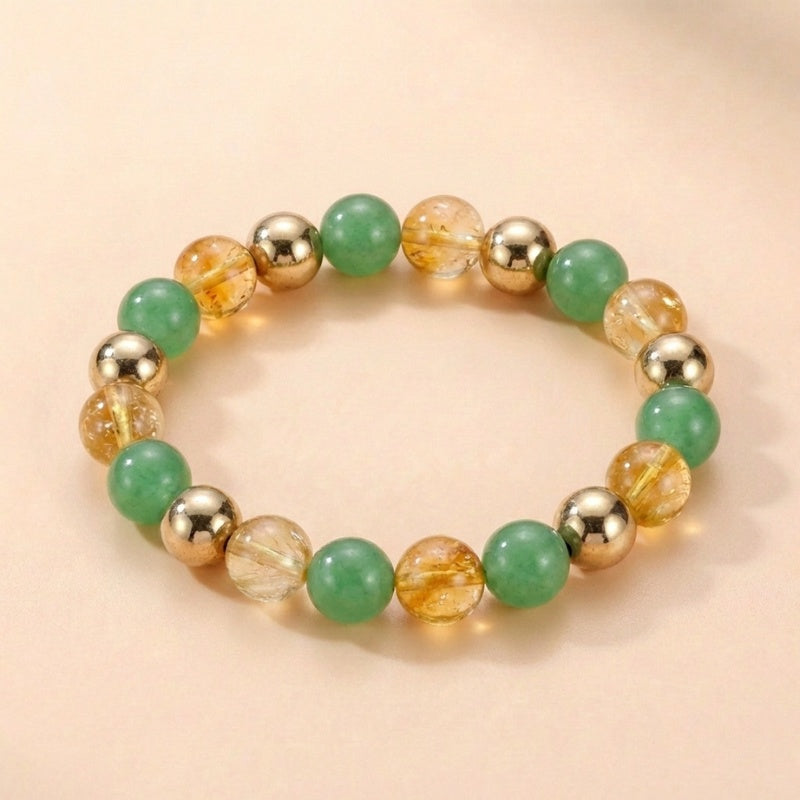
The Natural Aventurine & Hematite Triple Stone Luck Bracelet combines green aventurine, known as the stone of opportunity, with hematite’s grounding weight, aimed at staying level-headed while pursuing new opportunities rather than getting ahead of yourself. For more on the aventurine side, read our green aventurine bracelet meaning guide.
Magnetic hematite on its own
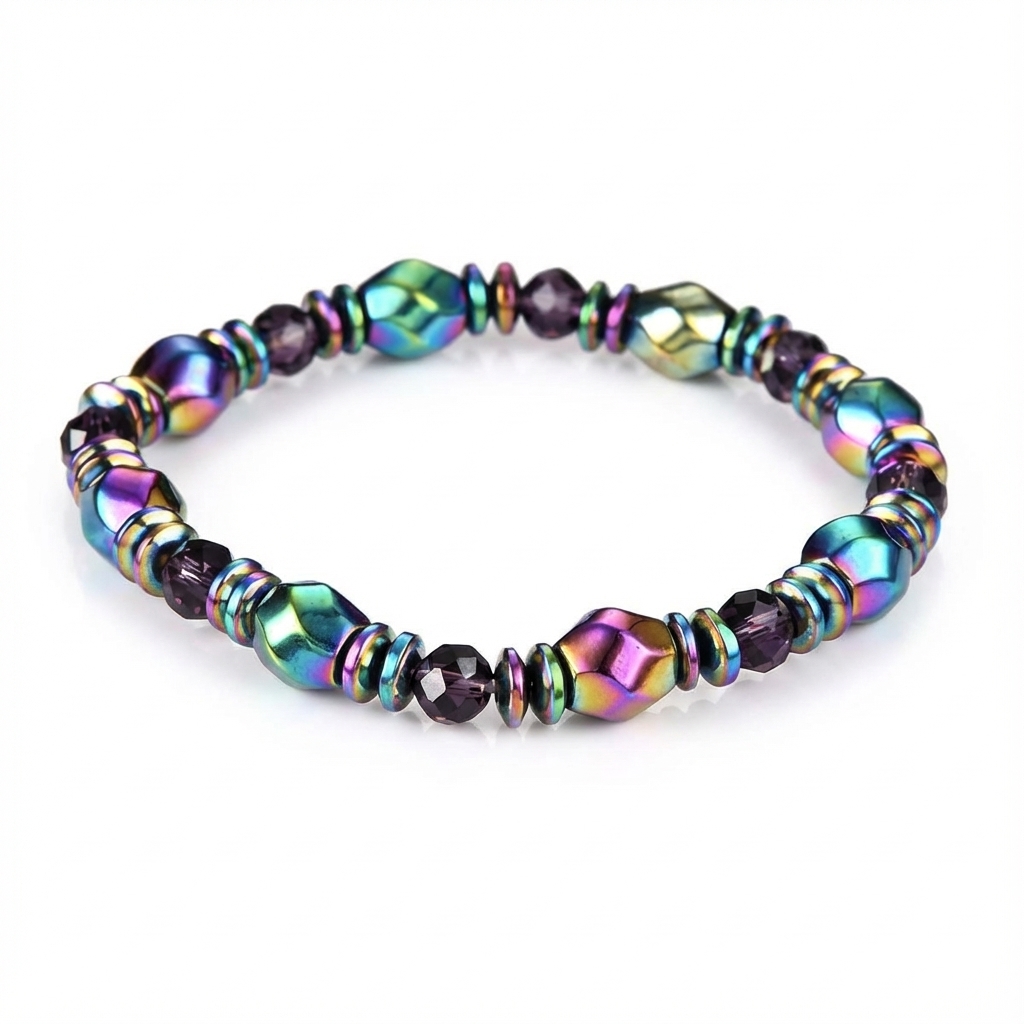
The Rainbow Hematite Magnetic Bracelet uses magnetic hematite beads with a rainbow-like metallic luster, worn as a simple, unisex grounding piece without mixing in other stones.
Magnetic hematite with the seven chakra colors
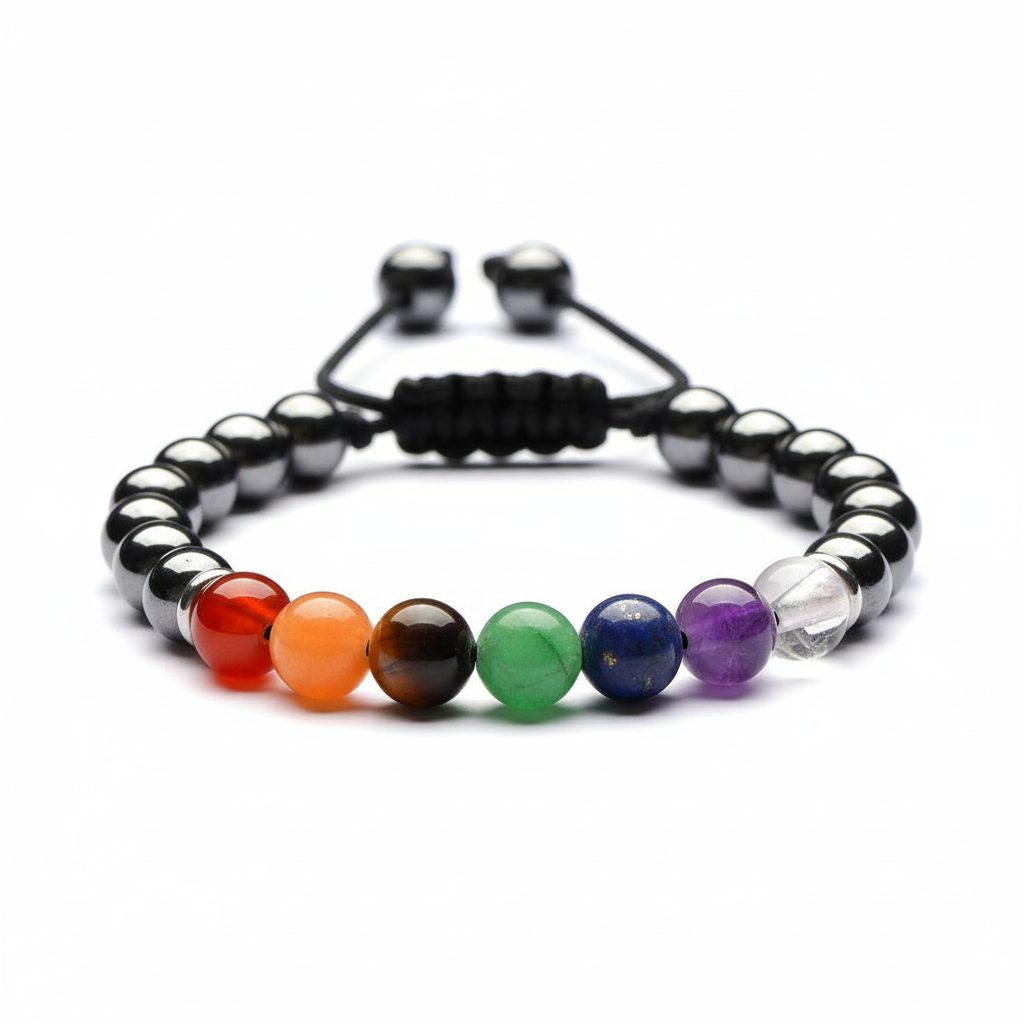
The 7 Chakra Hematite Bracelet pairs magnetic hematite with seven colored stones representing each chakra, so you get the grounding base plus a stone for each of the other six energy centers. See our 7 chakra bracelet meaning guide for what each color stands for.
How to wear a hematite bracelet
There is no strict rule tied specifically to hematite. The common convention, discussed in our guide on which wrist to wear a red string bracelet, is that the left (receiving) wrist is used for stones you want to “take in,” which many people apply to grounding stones like hematite as well. Wear whichever wrist feels comfortable; elastic bracelets should sit snug but not tight.
Caring for hematite
- Take it off before showers, swimming and heavy exercise; moisture can dull the polished metallic finish over time.
- Keep magnetic hematite away from credit cards, hotel key cards, hearing aids, watches and other magnetic-stripe or magnetically sensitive items; strong magnets can erase or damage them.
- Wipe beads with a soft, dry cloth rather than jewelry cleaner, which can strip the surface shine.
- Store away from strong magnets or other magnetic jewelry so beads do not chip each other when they snap together.
Frequently asked questions
Is hematite the same as black obsidian?
No. Hematite is an iron oxide mineral with a metallic gray-black color and a red streak; black obsidian is volcanic glass. They are often used together for the same grounding-and-protection purpose, but they are different materials. See our tourmaline vs obsidian guide for more on obsidian specifically.
Can I shower or swim with a magnetic hematite bracelet?
It is better not to. Water and the elastic cords used on most magnetic hematite bracelets do not mix well over time, and the metallic finish can dull.
Why do some hematite beads look rainbow-colored?
That iridescent “rainbow hematite” finish is a surface coating applied to the beads; the base material underneath is the same hematite or magnetic hematite composite.
A note: the grounding and protection meanings described here are traditional and cultural beliefs associated with hematite, not medical claims. Magnetic jewelry is not a substitute for medical treatment, and anyone with a pacemaker or similar device should check with a doctor before wearing magnetic jewelry of any kind.
[social_share]