Bodhi seed beads look humble compared to polished gemstones: small, textured, pale brown orbs with a naturally bumpy surface. That plainness is part of the point. In Buddhist tradition, the bodhi seed is tied directly to the story of enlightenment itself, which is why it is one of the most common materials used for mala prayer beads.
What is a bodhi seed?
Bodhi seeds come from the Bodhi tree (a type of fig tree, Ficus religiosa), the same species of tree under which, according to Buddhist tradition, Siddhartha Gautama sat and attained enlightenment, becoming the Buddha. “Bodhi” itself means “awakening” or “enlightenment” in Sanskrit and Pali. The seeds are dried, and sometimes carved or left in their natural textured state, then strung into bracelets and malas.
Why are bodhi seeds used for mala beads specifically?
A full mala traditionally has 108 beads, a number with its own significance across Buddhist and Hindu traditions (it is linked to the number of worldly desires or defilements one is meant to overcome, among other symbolic counts), used for counting mantra repetitions or breaths during meditation. Bodhi seed is one of the most traditional materials for this purpose precisely because of its direct link to the enlightenment story, rather than being chosen for appearance.
Bodhi seed jewelry: what the designs add
Bodhi seed with a lion head charm and mantra
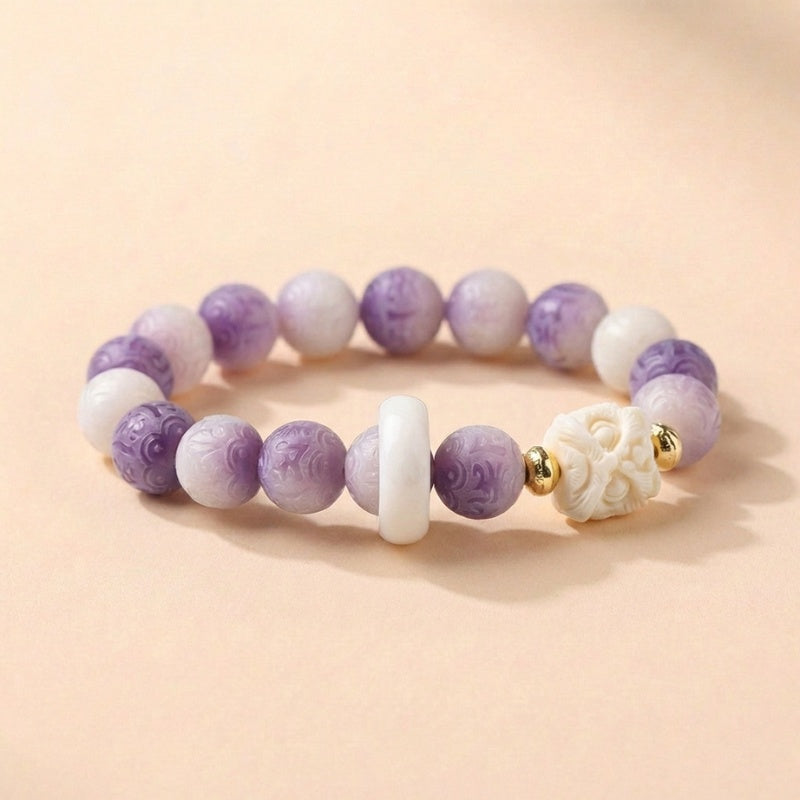
The Bodhi Seed & Lion Head Protection Bracelet pairs natural bodhi seed beads with a lion head charm, a Buddhist symbol of courage, and an engraved mantra, combining the seed’s enlightenment association with a protective element.
A full 108-bead mala in white jade
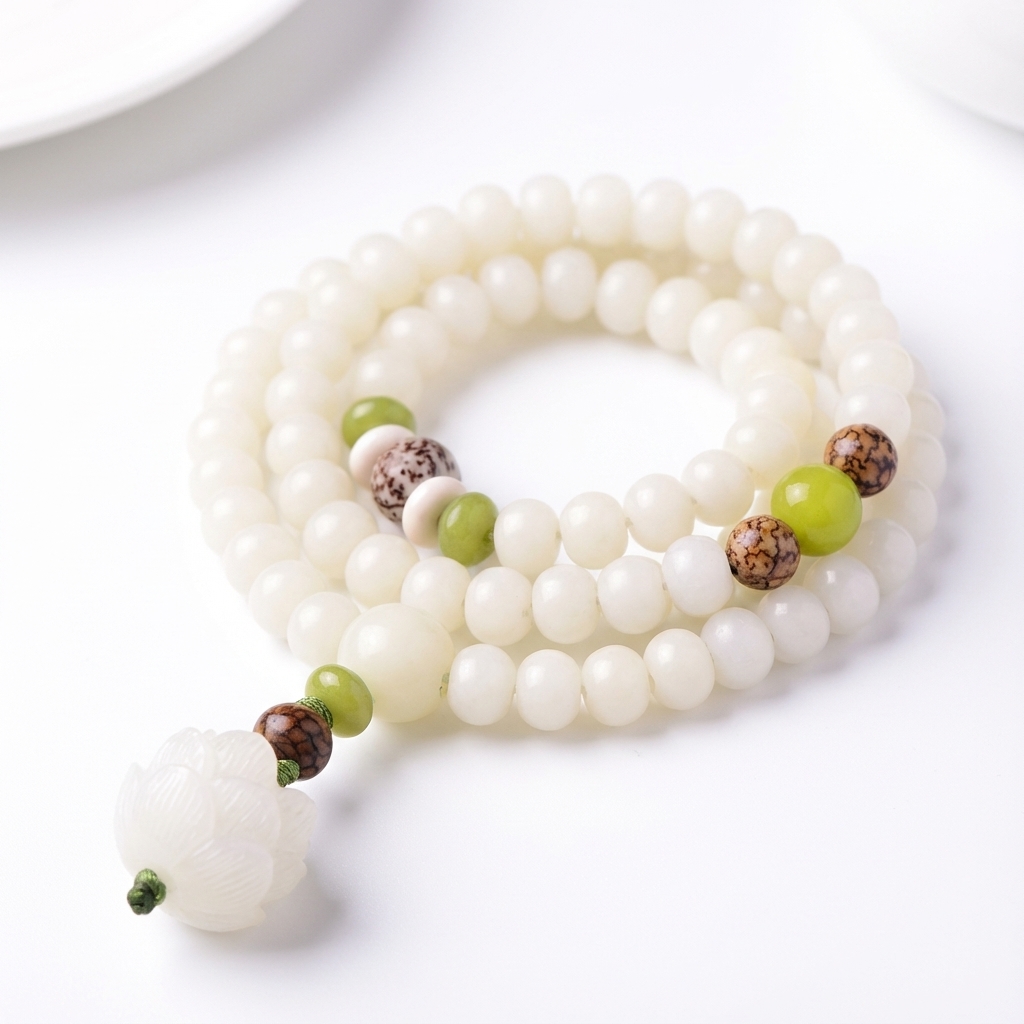
The White Jade Bodhi Seed Mala is a full traditional 108-bead mala with a lotus guru bead, closer to the meditation tool form than a casual everyday bracelet. The lotus is its own Buddhist symbol of purity rising out of muddy water.
How to wear or use bodhi seed beads
A full mala is traditionally held or worn draped rather than worn tight like a bracelet, often used by moving a bead between the fingers with each mantra repetition or breath during meditation. A shorter bodhi seed bracelet, like the lion head design above, is worn the same way as any other beaded bracelet, with no fixed wrist rule.
Caring for bodhi seed beads
- Keep bodhi seeds dry; as an organic, seed-based material, they can crack or swell if soaked.
- Avoid direct, prolonged sun exposure, which can dry out and crack the seeds over time.
- Wipe with a soft, dry cloth rather than any liquid cleaner.
- A light sheen that develops with handling over years is normal and often considered desirable, similar to a well-used wooden object.
Frequently asked questions
Is a bodhi seed the same as a seed pearl or other “seed” bead?
No. “Seed bead” in general jewelry language usually refers to tiny glass beads unrelated to actual seeds; a bodhi seed is a genuine dried plant seed from the Bodhi (sacred fig) tree.
Do I need to be Buddhist to wear bodhi seed jewelry?
No. Many people wear it as a general symbol of mindfulness or as a meaningful, naturally-made material, independent of religious practice, though it is worth knowing the tradition it comes from.
Why do bodhi seed beads vary in color and texture?
Because they are a natural, organic material, each bead has slightly different grain, color and surface texture, unlike machine-cut stone beads, which is considered part of their character rather than a flaw.
A note: the meanings described here reflect Buddhist tradition and cultural practice, not medical or psychological claims.
[social_share]