Not all jade is the same. When a product description says “Hetian jade” rather than simply “jade,” it is pointing to a specific, historically prized type of nephrite jade, and that distinction matters if you want to understand why some jade bracelets are treated as more significant than others.
Here is what Hetian jade actually is, why it has been valued in Chinese culture for thousands of years, and how it compares to ordinary jade jewelry.
What is Hetian jade?
Hetian jade (also spelled Hotan jade) is a type of nephrite jade traditionally sourced from the Hetian region of Xinjiang, China, where it has historically been found both in riverbeds (as smooth, water-worn pebbles called “mutton fat jade” when pure white) and in surrounding mountains. It is technically nephrite, not jadeite, the other major mineral also called “jade” in English, and it is prized for its soft, waxy luster and fine, even texture rather than for being a different gemstone altogether.
Why is Hetian jade considered special in Chinese culture?
A few threads come together in Hetian jade’s reputation.
- Thousands of years of continuous use. Hetian jade has been worked into ritual objects, ornaments and burial items in China since at least the Neolithic period, making it one of the longest continuously used gem materials in any culture.
- A symbol of virtue, not just wealth. Confucian tradition associated jade’s qualities, hard yet warm to the touch, translucent yet strong, with ideal human virtues such as integrity and gentleness, so wearing jade was historically about character as much as status.
- Believed to “protect” the wearer over time. A long-standing folk belief holds that jade absorbs and reflects the condition of the person wearing it, becoming more lustrous with daily wear and sometimes said to “warn” the owner by clouding when something is wrong. This is a cultural belief, not a verified physical property of the stone.
Hetian jade bracelets: what the combinations add
Hetian jade with a red cord
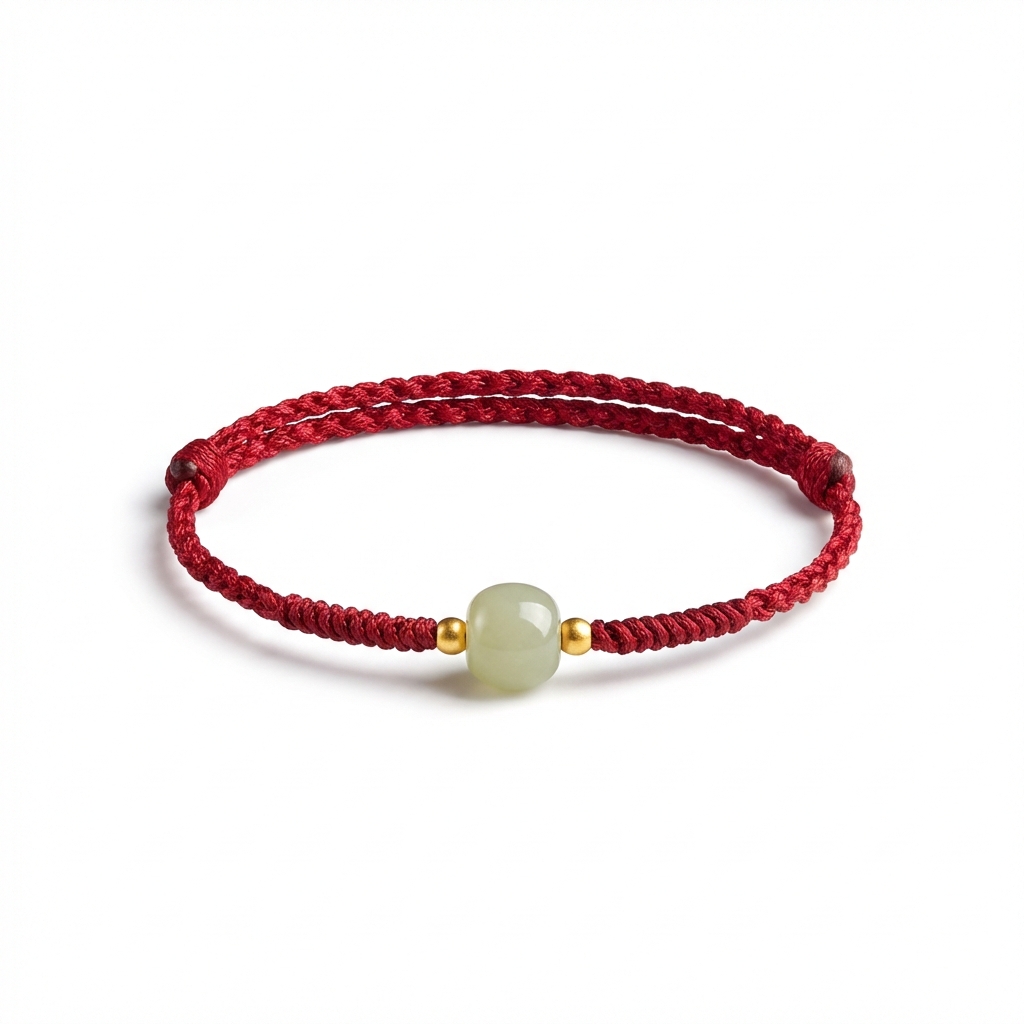
The Red String Hetian Jade Bracelet pairs a single genuine 8mm Hetian jade bead with a hand-braided red cord, keeping the focus on the jade itself in the simplest traditional form.
Hetian jade with bamboo-shaped beads and peridot
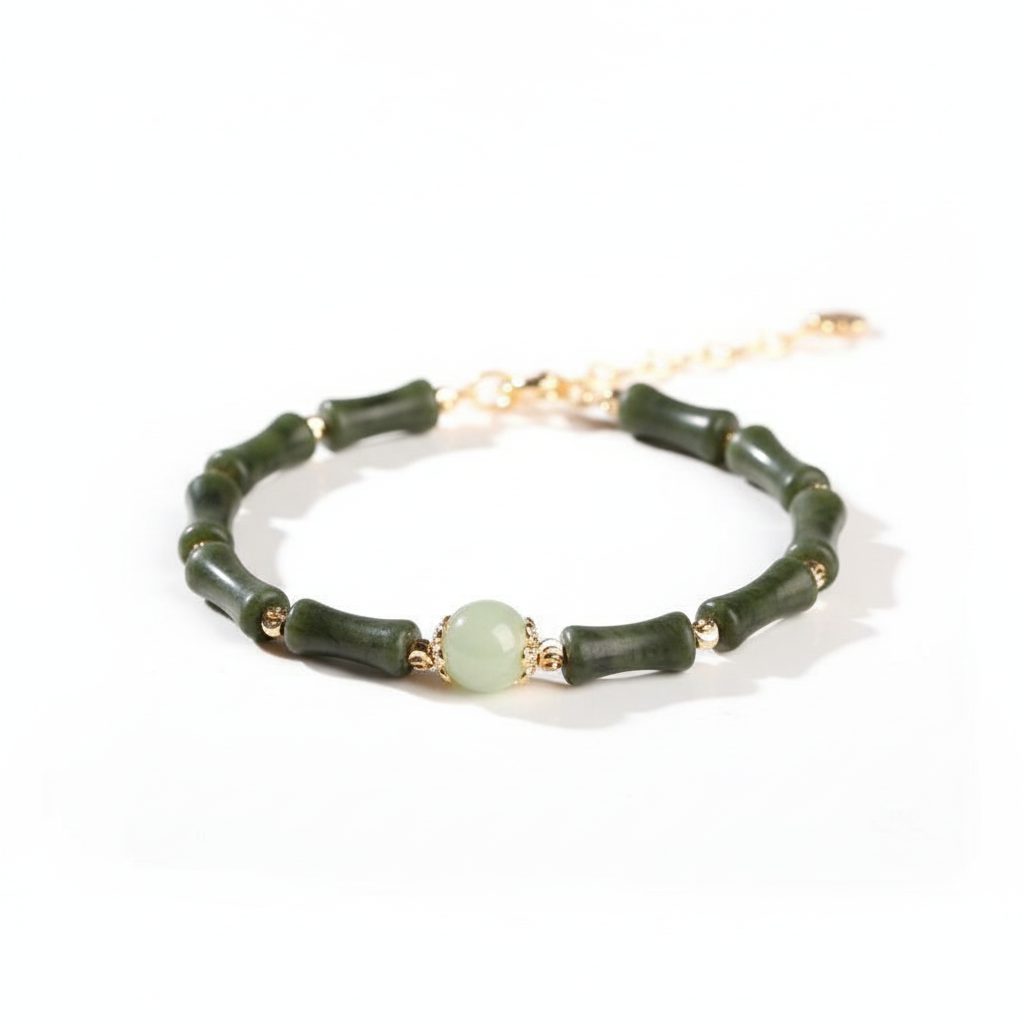
The Hetian Jade Lucky Bamboo Bracelet uses bamboo-shaped Hetian jade beads with a peridot centerpiece. Bamboo is its own Chinese symbol of resilience and steady growth, since it bends in the wind without breaking, which layers an extra meaning onto the jade.
Hetian jade with garnet and a Fu charm
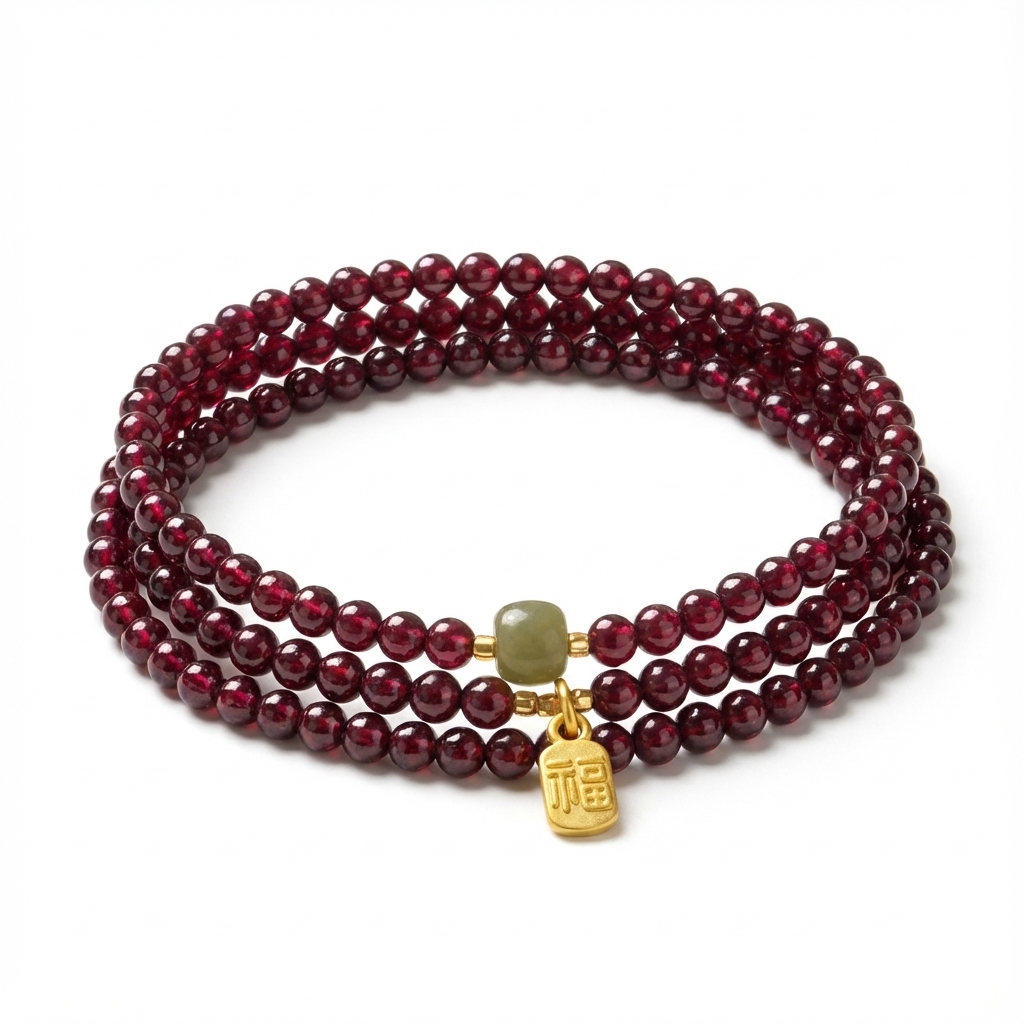
The Red Garnet & Hetian Jade Fu Wealth Bracelet combines Hetian jade with garnet and a copper Fu character charm. For what the Fu character itself means, see our Fu bracelet meaning guide.
Hand-carved Hetian jade
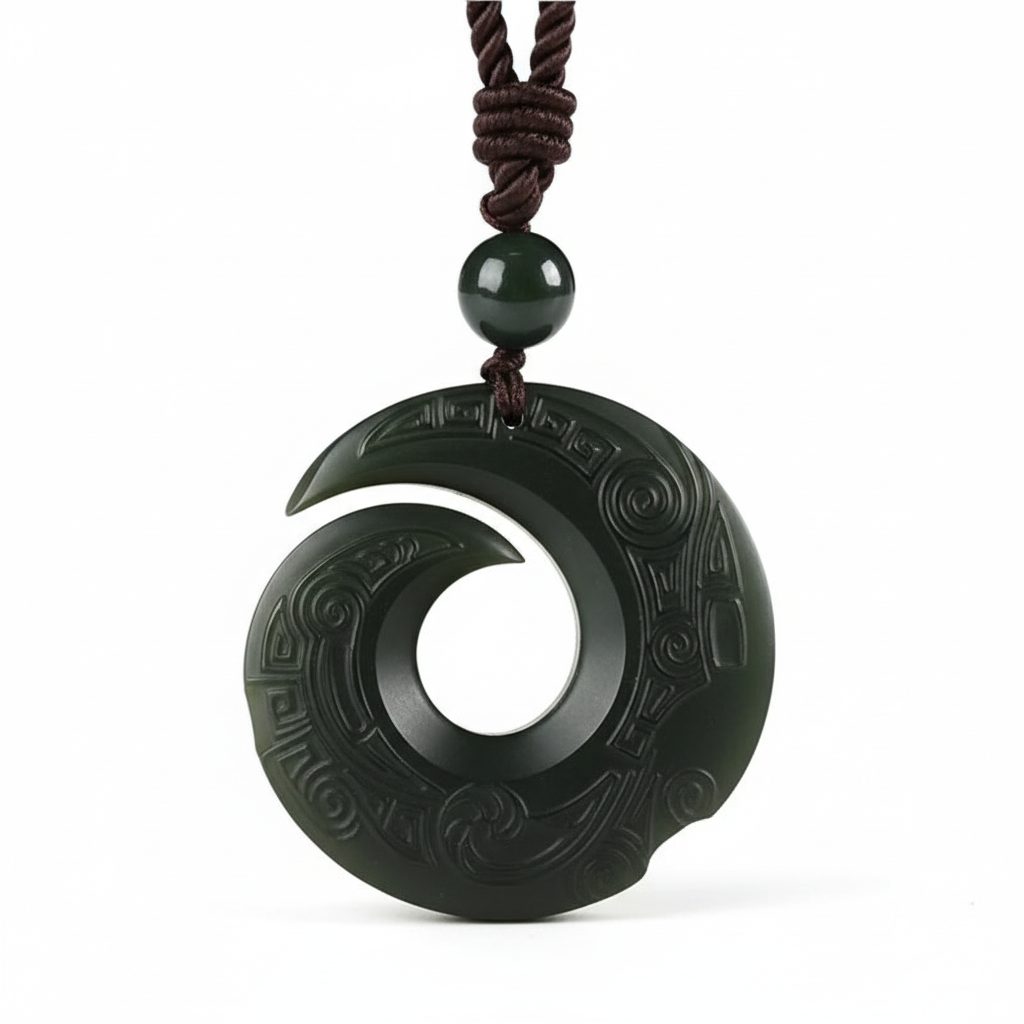
The Hetian Jade Manifesting Necklace features authentic dark green Hetian jade that is hand-carved rather than left as a plain bead, a more traditional presentation of the stone.
How to wear a Hetian jade bracelet
There is no single rule tied specifically to Hetian jade. As with our guide on which wrist to wear a red string bracelet, many people wear calming, luck-oriented stones like jade on the left, “receiving” wrist, though this is a convention rather than a fixed rule.
Caring for Hetian jade
- Avoid harsh chemicals, perfume and household cleaners, which can dull the jade’s surface over time.
- Take it off before swimming and heavy exercise so the cord does not wear through.
- Wipe with a soft, slightly damp cloth rather than ultrasonic cleaners.
- Some wearers avoid letting a jade bracelet strike hard surfaces, since nephrite, while tough, can chip on a sharp impact.
Frequently asked questions
Is Hetian jade the same as jadeite?
No. Hetian jade is nephrite, while jadeite is a separate mineral, often associated with the brighter, more saturated green “imperial jade” seen in fine jewelry. Both are called “jade” in English, which causes confusion.
Is all “Hetian jade” jewelry actually from Hetian?
Not necessarily. Because the name refers to a style and quality of nephrite as well as a place, some jewelry labeled “Hetian jade” uses nephrite of similar type mined elsewhere. Reputable sellers should be clear about the actual origin and grade of the stone.
Does Hetian jade need to “touch the skin” to work?
That is a traditional folk belief, not something we can verify, and it is not a reason to avoid wearing a bracelet over clothing or layering it with other jewelry if you prefer.
A note: the cultural and symbolic meanings described here are traditional beliefs associated with Hetian jade, not scientific or medical claims.
[social_share]