In Chinese folklore, one of the Eight Immortals, Li Tieguai, is always drawn with a gourd. He is usually shown leaning on an iron crutch, and from the gourd comes a stream of medicine he uses to help people who are sick. That little bottle-shaped vessel is the Wu Lou, and it has been a symbol of health, protection and good fortune for a very long time.
If you have seen a small gourd charm on a bracelet and wondered what it means, this guide covers where it comes from, why it is considered lucky, and how people wear it.
What is a Wu Lou?
Wu Lou (also written hulu or hu lu) is the Chinese word for the bottle gourd, a plant with a rounded double-bulb shape. The Wu Lou is used in feng shui as a protective and health-related symbol, and it appears as a charm on bracelets, as a hanging ornament and as a small decoration in the home. You will sometimes see it called a “Holy Gourd” in English product descriptions.
Why is the gourd considered lucky?
Three separate ideas come together in the Wu Lou.
1. It sounds like a blessing
In Mandarin, the word for gourd, hú lu (葫芦), sounds very similar to fú lù (福禄), meaning “blessings and prosperity”. Chinese culture loves this kind of wordplay, and a gourd charm becomes a wish for both at once.
2. It is a container of medicine
Traditional Chinese medicine used gourds as containers, and there is an old phrase, xuán hú jì shì, “hang up the gourd to help the world”, still used to describe physicians. In folklore the gourd holds a healing remedy, which is why it became a symbol of health and a long life.
3. It grows many seeds and long vines
A single gourd holds a large number of seeds, and the plant grows long, trailing vines. The Chinese word for a gourd vine, màn dài, sounds like wàn dài, “ten thousand generations”, so the Wu Lou also stands for family continuity and many descendants.
How is the Wu Lou used in feng shui?
The traditional advice is that the gourd works as a container that absorbs unhealthy or negative influences, in the same spirit as the folktale gourd that holds medicine. Common practices include:
- Hanging a Wu Lou near the bed or in a bedroom, associated with rest and well-being.
- Keeping one near a family member who is unwell, as a symbolic gesture of care.
- Carrying a small charm, often on a bracelet or key ring, as a personal token of health and longevity.
These are cultural practices, not medical treatments, and a Wu Lou is never a substitute for seeing a doctor. It is a symbol of wishing yourself and your family well.
Wu Lou bracelets: what the materials add
The gourd charm is usually combined with a stone or metal, and each adds its own layer of meaning.
Jade
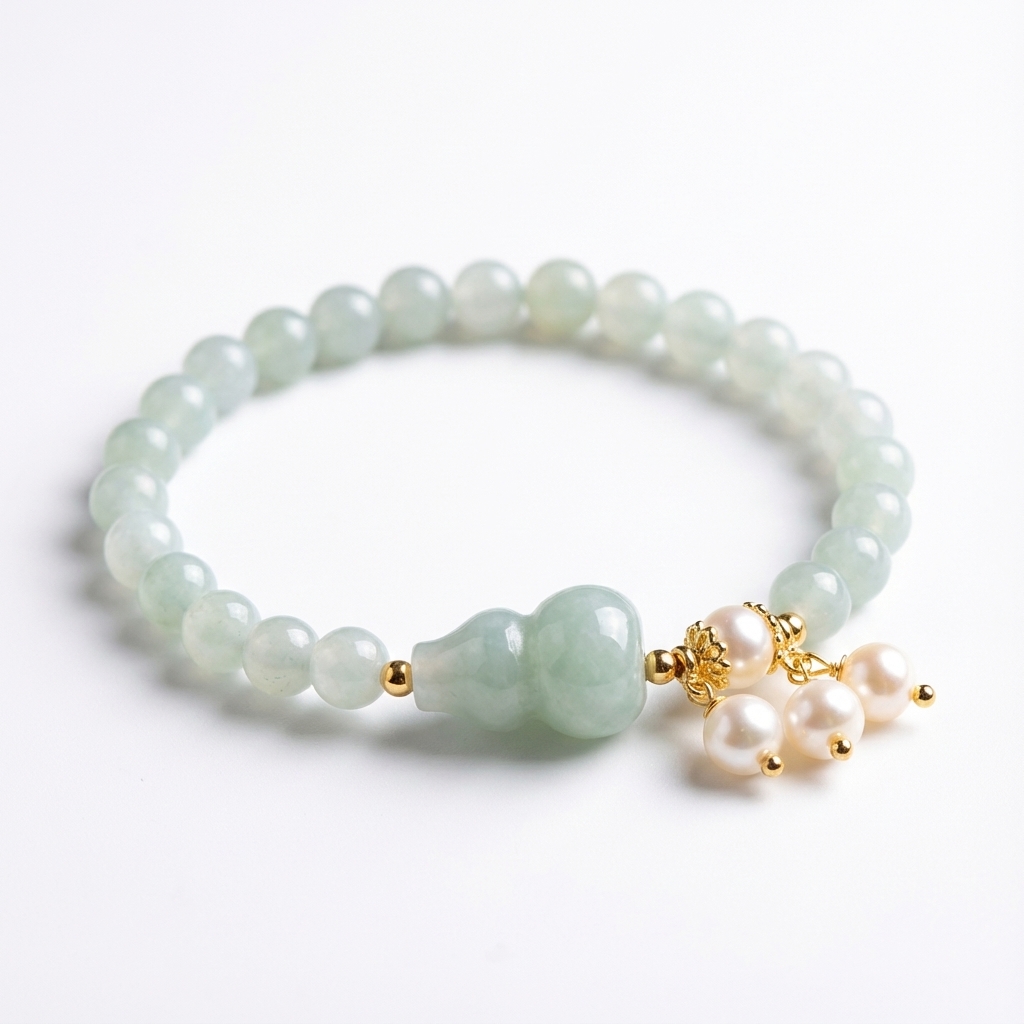
Jade is a classic stone of protection and long life in Chinese culture. The Light Green Jade Wu Lou Bracelet uses 6mm natural light green jade beads with a single pearl and a metal alloy Wu Lou charm, and measures 17cm in length. If you like the jade side, read the meaning of a green jade bracelet in feng shui.
Blue tiger eye
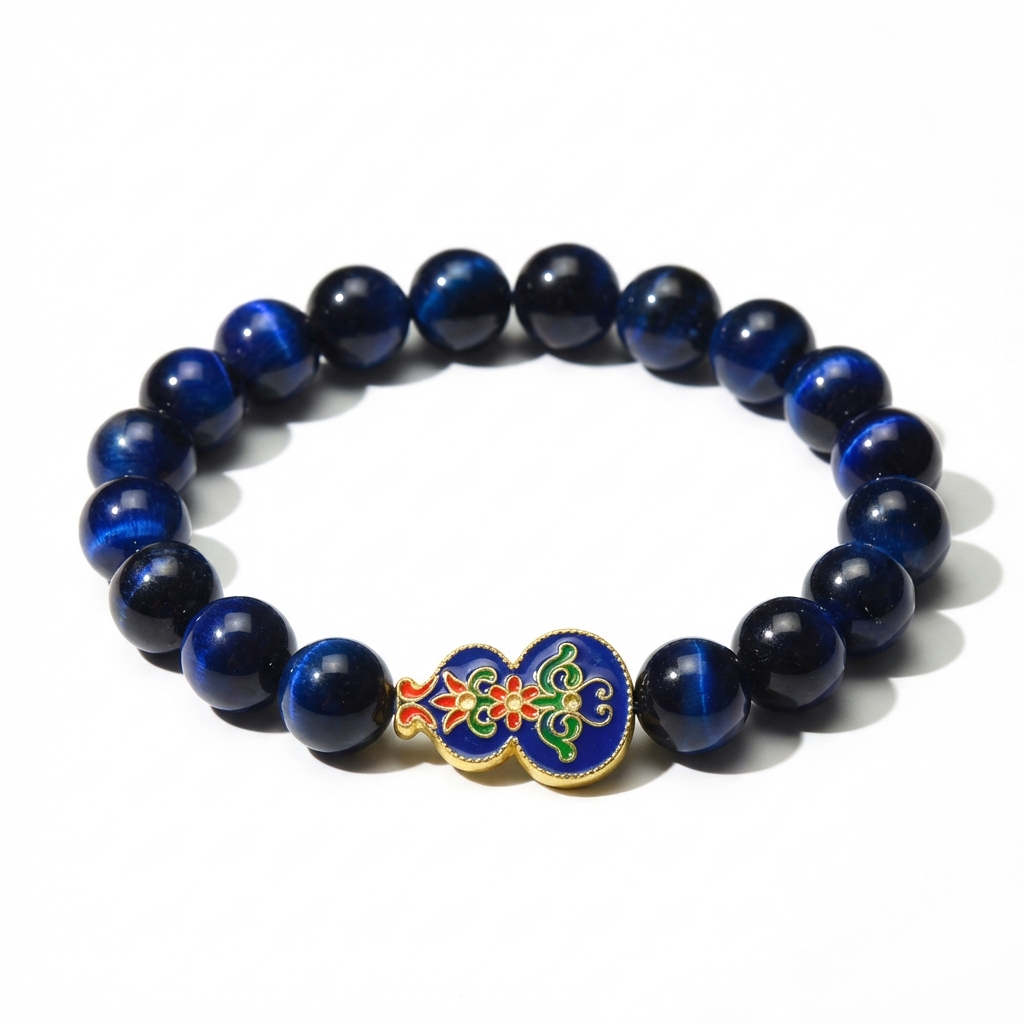
The Wu Lou Blue Tiger Eye Feng Shui Bracelet combines genuine 8mm blue tiger eye stones with a zinc alloy Wu Lou charm on a durable elastic band, for those who want the gourd with a calmer blue tone.
Copper and the mantra
The Copper Wu Lou Health and Protection Mantra Bracelet uses 12mm copper alloy beads engraved with the Om Mani Padme Hum mantra and the lotus symbol, centered on a traditional Wu Lou charm. To find out what the inscription means, read our guide to the Om Mani Padme Hum bracelet.
How to wear a Wu Lou bracelet
There is no strict rule. Many people wear it on the left wrist, following the convention that the left is the “receiving” side, and our guide on which wrist to wear a red string bracelet explains where that idea comes from. If the bracelet is elastic, a comfortable, not-too-tight fit lets you wear it all day.
Caring for it
- Take stone and jade bracelets off for showers, swimming and heavy exercise.
- Wipe metal charms with a dry, soft cloth.
- Store elastic bracelets flat, not stretched over a hook, so the cord keeps its shape.
The gourd at weddings and among the star gods
The Wu Lou is not only a health symbol. In ancient China a wedding custom called hé jǐn had the bride and groom drink wine from two halves of a bottle gourd, joined by a red thread, to seal their bond. That is one reason the gourd also stands for a marriage that holds together.
It also appears among the “Fu Lu Shou” trio of star gods, who stand for blessings, prosperity and longevity. Shou, the god of longevity, is usually drawn carrying a staff with a gourd hanging from it, which ties the gourd neatly to the fú lù wordplay above.
In homes, gourds are hung near doors, beds and windows, in wood, brass, ceramic or dried real-gourd versions. Real dried gourds are decorative and fragile, while metal and ceramic ones last for years. A wearable charm is the same idea in miniature.
Frequently asked questions
Is a Wu Lou only for people who are ill?
No. It is a general symbol of health, longevity and protection, and many people wear it simply as a good-luck charm.
Should the Wu Lou point up or down?
There is no fixed rule for a bracelet charm. When hanging a gourd in a room, traditional advice varies; follow the guidance of the tradition or teacher you trust.
Is a Wu Lou the same as a Pixiu?
No. The Pixiu is a mythical creature associated with wealth, while the Wu Lou is a gourd associated with health and protection. If you are interested in the wealth side, see our Pixiu bracelet rules.
A note: the Wu Lou is a cultural symbol of wishing for health and long life. It is not medical advice or a treatment.
[social_share]